| SHADOWS ON THE WALL | REVIEWS | NEWS | FESTIVAL | AWARDS | Q&A | ABOUT | TALKBACK | |||||
 Shadows off the beaten path Shadows off the beaten pathIndies, foreign, docs and shorts...
On this page:
FILIPINANA |
FJORD |
THE PORTUGUESE HOUSE
| |||||
| See also: SHADOWS FILM FESTIVAL | Last update 2.Oct.26 | |||||
|
Filipiñana Review by Rich Cline | 
| |||||
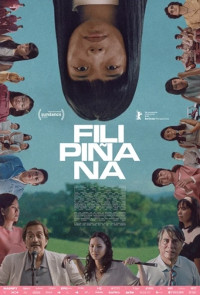 dir-scr Rafael Manuel prd Jeremy Chua, Alex Polunin, Bianca Balbuena, Bradley Liew, Nadia Turincev, Omar El Kadi with Jorrybell Agoto, Carmen Castellanos, Teroy Guzman, Carlos Siguion-Reyna, Isabel Sicat, Nour Hooshmand, Elle Velasco, Angeli Bayani, Micah Musa, Sunshine Teodoro, Thea Marabut, Dyas Adarlo release Ph/US 28.Aug.26, UK 20.Nov.26 26/Philippines Film4 1h40 SUNDANCE FILM FEST BERLIN FILM FEST  Is it streaming? |
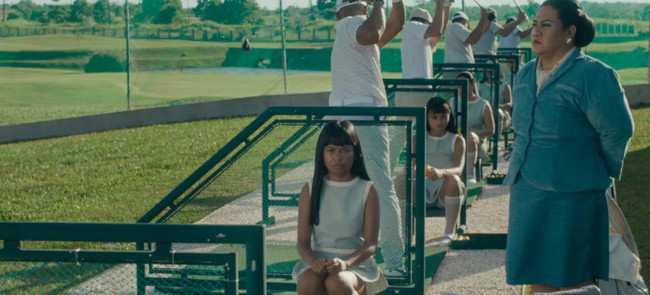 Creating a deadpan sense of humour with witty camerawork, performances, editing and sound, this strikingly well-made film takes a knowingly pointed look at life in the Philippines, specifically at the point where classes collide. Writer-director Rafael Manuel is terrific at simply letting a scene unfold in its own time, often without dialog, revealing secrets as it pushes the characters and plot forward. And the serious undertones are riveting. At an exclusive Manila club, 16-year-old tee girl Isabel (Agoto) sets up balls for wealthy golfers. She also sneaks off to climb mango trees and lounge in the grass, watching dramas unfold. For example, Renato (Siguion-Reyna) wants his 30-ish niece Clara (Castellanos) to move home from New York, but she can't find a reason why. Then a caddy (Sicat) asks Isabel to return a golf club to owner Palanca (Guzman). Trying to locate him, she embarks on an odyssey around the resort, discovering that a young girl has gone missing somewhere in the rough. Clever touches fill the screen, making hilarious comments on human nature while taking a more lacerating view of the chasm between the members and the workers. Through all of this, a portrait of Filipino society emerges, centred in this amusingly artificial landscape where foreign trees struggle to survive. Along with their privileged clientele, the tee girls and caddies encounter priests and a blind musical group between the greens. Both Isabel and Clara are piecing together what they see into a rather unnerving bigger picture. Agoto and Castellanos play them as watchful young women who only speak when they have something meaningful to say. And even then, we can see that they are holding their thoughts to themselves. But they take in everyone and everything around them. Their interaction is powerfully textured, especially as both refuse to be intimidated by people with power. It's fascinating to watch the warm camaraderie between the workers, as they languish outdoors under fans, while their bosses keep the air conditioning blasting in their offices. And the way Manuel orchestrates much of the action as choreographed dance is simply wonderful, from cleaning pools to swiping at balls on the driving range. This makes the most of the almost comically crisp locations and costumes, while bringing out far more insidious story elements, especially as a tragedy begins to unfold.
| ||||
|
Fjord Review by Rich Cline |
MUST  SEE SEE
| |||||
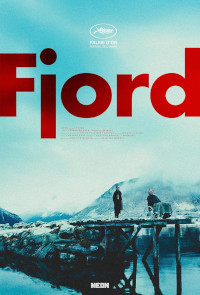 dir-scr Cristian Mungiu prd Cristian Mungiu, Tudor Reu, Andrea Berentsen Ottmar, Dyveke Bjokly Graver with Sebastian Stan, Renate Reinsve, Lisa Carlehed, Markus Scarth Tonseth, Vanessa Ceban, Jonathan Ciprian Breazu, Henrikke Lund-Olsen, Oyvind Venstad Kjeksrud, Ellen Dorrit Petersen, Lisa Loven Kongsli, Bartek Kaminski, Anne Kokkinn release Nor 4.Sep.26, US 9.Oct.26, UK 13.Nov.26 26/Norway 2h26 CANNES FILM FEST TORONTO FILM FEST Now streaming... |
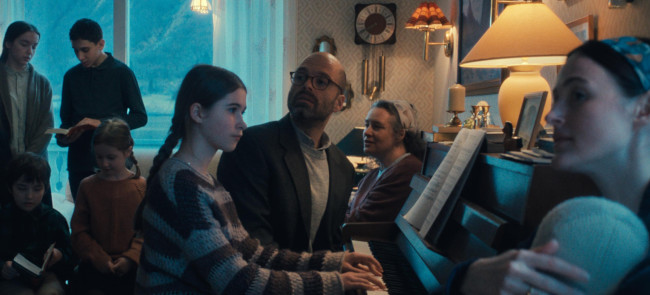 With vividly crisp writing and direction, Romanian filmmaker Cristian Mungiu takes on delicate cultural and societal issues with this involving family drama set on a Norwegian fjord. It may feel rather long, but the pace is steady and riveting, as firmly held social and religious traditions collide in a progressive society. But of course it's not nearly as simple as that, and the actors bring out stunning nuances. In a small waterfront town, Romanian engineer Mihai (Stan) is resettling with Norwegian nurse Lisbet (Reinsve) and their five children, from teens Elia (Ceban) and Emmanuel (Breazu) to an infant. When a teacher (Kongsli) notices a bruise on Elia's face, she alerts Child Protective Services, and all of the children are taken into care during the investigation. Mihai and Lisbet get support from their neighbours Mats (Tonseth), the school's headmaster, and Mia (Carlehed), a lawyer. But navigating this system is complex, and it seems particularly harsh for a foreign family with an outspoken religious tradition. Norway's child-protection system is depicted as cooly efficient at protecting children from perceived abuse, but doesn't seem to take into account side effects like the jolt of separation for both kids and parents. By contrast, Mihai struggles to understand why the family's religious beliefs or language difficulties have anything to do with their case. All of these issues, plus several other wrinkles, are adeptly stirred together to create an unusually thought-provoking odyssey. Performances are understated but bold, finding powerful edges in each of the characters. Stan gives Mihai a sometimes startling stubbornness, unable to contain himself in the face of injustice. So it's not necessarily about whether he's right, but that he is rudely dismissed as a religious foreigner. Reinsve is even more subtle as the quietly steely Lisbet, forced to see her homeland through new eyes. Ceban and Breazu skilfully provide their own important perspective. And Carlehad and Tonseth offer an astonishingly textured take on the local culture. Indeed, it's unnerving to see Mats so coldly discipline his teen daughter (Lund-Olsen), who has befriended Elia and Emmanuel, but of course his psychological manipulation doesn't raise red flags here. This dual standard is bracingly depicted with striking understatement that sends a chill through the audience. Where the story goes is startling and almost shockingly honest, as Mihai and Lisbet come to the only possible decision they can make. The fact that this might be the point of everything is darkly provocative on multiple layers.
| ||||
|
The Portuguese House Una Quinta Portuguesa Review by Rich Cline | 
| |||||
 dir-scr Avelina Prat prd Miriam Porte, Luis Urbano, Miguel Molina, Adan Aliaga with Manolo Solo, Maria de Medeiros, Branka Katic, Rita Cabaco, Goncalo Dantas, Morgan Blasco, Xavi Mira, Kasia Kapcia, Rui Morisson, Ivan Barnev, Luisa Cruz, Zia Soares release Sp 8.May.25, UK 2.Oct.26 25/Spain 1h54 Is it streaming? |
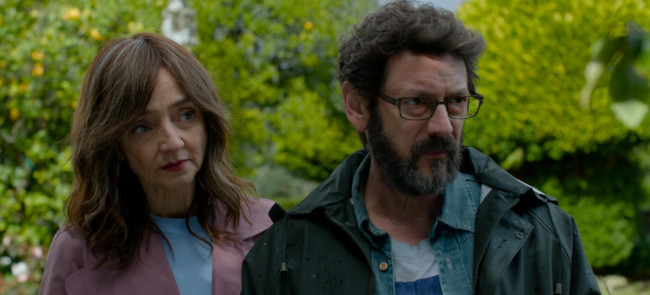 Quietly observational, this Spanish drama opens with a mystery that sends a soft-spoken middle-aged man on an unusual odyssey in which he reinvents himself as someone new. Even though the film is rather slow and overlong, writer-director Avelina Prat's understated approach allows situations and relationships to develop organically with emotional resonance. She also continually drops little details into scenes that add colour, texture and real-life comical touches. Geography professor Fernando (Solo) is unnerved when his wife (Kapcia) returns home to Serbia without a word. He has no way to find her; she clearly doesn't want to be found. Unable to concentrate on work, he heads to the Portuguese coast, where an unexpected encounter leads to him assuming the identity of a gardener at a quinta, a small farm in the hills owned by Amalia (de Medeiros), who figures out his secret but doesn't ask questions. Years pass, and he begins to feel at home here. Then he gets some news from Spain. It's intriguing to see Fernando's passion for maps extend so softly into a love of plants and trees, and he also begins to open up to new people, sharing stories with Amalia and also geting to know her pregnant housekeeper Rita and after a time jump, her cheeky son Rodrigo (Dantas). Even though the film's pace is very gentle, the twists and turns that emerge are involving. And deeper ideas continue to be layered into the narrative, exploring the concept of home and family. All of the performances are naturalistic. Solo has an earthy charm as the reticent Fernando, which feeds beautifully into his somewhat enigmatic presence as this imposter gardener who grows into the real thing. Where his journey takes him is surprising, as he finds security in this adoptive family led by the radiant de Medeiros' astute Amalia. Cabaco also has a strong presence, and later on Katic adds a terrific kick as a fellow interloper. At one point, Amalia recounts how she came to own this quinta. She also has a sad past that she keeps hidden, born in Angola but never allowed to claim her African identity, although she has found ways to maintain friendships and continue the stories. For her, the farm is both her freedom and her prison. And it is of course the same for Fernando. It isn't until she eventually asks to hear his story that he begins to understand who he is.
| ||||

See also: SHADOWS FILM FESTIVAL © 2026 by Rich Cline, Shadows
on the Wall
HOME | REVIEWS | NEWS | FESTIVAL | AWARDS
| Q&A | ABOUT | TALKBACK | | ||||

