| SHADOWS ON THE WALL | REVIEWS | NEWS | FESTIVAL | AWARDS | Q&A | ABOUT | TALKBACK | |||||||||||||
 Shadows off the beaten path Indies, foreign, docs and shorts...
On this page:
ALL OF A SUDDEN |
COMEDIE-FRANCAISE |
FATHERLAND
| |||||||||||||
| See also: SHADOWS FILM FESTIVAL | Last update 14.Oct.26 | |||||||||||||
|
All of a Sudden Soudain Review by Rich Cline |  MUST  SEE | |||||||||||||
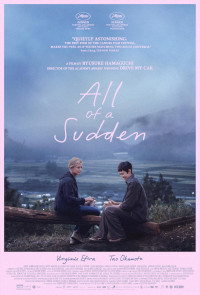 dir Ryusuke Hamaguchi scr Ryusuke Hamaguchi, Lea Le Dimna prd David Gauquie, Julien Deris, Kosuke Oshida, Yuji Sadai with Virginie Efira, Tao Okamoto, Kyozo Nagatsuka, Kodai Kurosaki, Jean-Charles Clichet, Marie Bunel, Romain Cottard, Marie Denarnaud, Gabriel Dahmani, Heloise Janjaud, Sephora Pondi, Lazare Gousseau release Fr 12.Aug.26, UK Oct.26 lff, US 25.Nov.26 26/France 3h16 CANNES FILM FEST TORONTO FILM FEST  Is it streaming? |
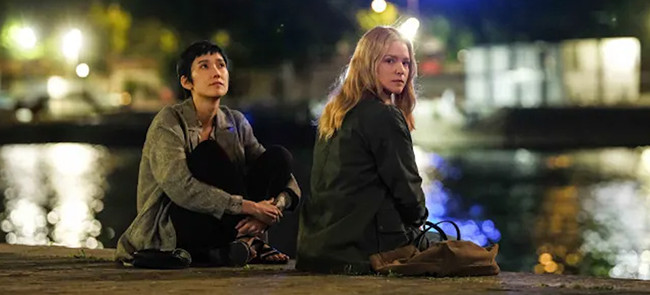 Beautifully observed, this lengthy French-Japanese drama dives deep into ideas about what it means to live in a community. While the film sometimes gets rather talky, it's delicately written, wonderfully performed and finely directed by Ryusuke Hamaguchi to carry the audience along with a steady pace and a flow of seriously meaty themes. It also becomes an involving exploration of how we react to life's sudden surprises In Paris, Marie-Lou (Efira) is so dedicated to her job as a care home director that she barely sleeps. She's training staff on the principles of "humanitude", which focusses on maintaining the dignity and independence even of patients with advanced dementia. But this requires more time and attention, and the owners don't want to give her the budget she needs. A chance meeting with autistic Japanese teen Tomoki (Kurosaki) leads Marie-Lou to theatre director Mari (Okamoto), and they begin to have long conversations about how society should embrace its weaker members, not hide them away. One of the main narrative points involves Mari's terminal cancer, which gives everything a sense of urgency, as she is determined to continue living her life and contributing to society as long as possible. This sends the film on a couple of plot-driven sideroads, such as when Marie-Lou and Mari take an oddly brief trip to Kyoto. And her pointed play, performed by actor Goro (Nagatsuka) features on-screen twice. But every scene is packed with resonant ideas that force us to think about how we see people around us. Stand-out side roles include Sophie (Bunel), an experienced nurse who doesn't appreciate humanitude, and Djibril (Dahmani), a 26-year-old orderly with rapping ambitions who surprises himself. They add additional textures to the film, including gorgeously naturalistic scenes in which the staff interacts with patients, leading to striking sequences such as when Mari teaches everyone the value of a foot massage. At the centre of this, the friendship between Marie-Lou and Mari is skilfully played by Efira and Okamoto. Together, these extraordinary actresses give the film an understated, emotive vibe that adds lovely complexity through both sparky humour and heady philosophical discussions. With its mix of French and Japanese dialog, the film requires quite a bit of the viewer, but it rewards us with a reminder of the importance of listening to others and also breaking the surface by asking pertinent questions that seek to understand someone's feelings and perspective. Because that's the only way to feel alive and connected.
| ||||||||||||
|
Comédie-Française De la Comédie-Française Review by Rich Cline | 
| |||||||||||||
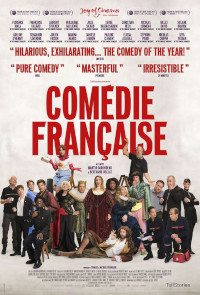 dir Martin Darondeau, Bertrand Usclat scr Bertrand Usclat, Martin Darondeau, Pauline Clement, Clemence Dargent prd Thomas Verhaeghe, Mathieu Verhaeghe with Pauline Clement, Laurent Stocker, Julien Frison, Marina Hands, Adeline D'Hermy,Sefa Yeboah, Daniele Lebrun, Benjamin Lavernhe, Serge Bagdassarian, Christian Hecq, Sephora Pondi, Florence Viala release Fr 22.Jul.26, US Aug.26 bfff, UK 9.Oct.26 26/France 1h14 Now streaming... |
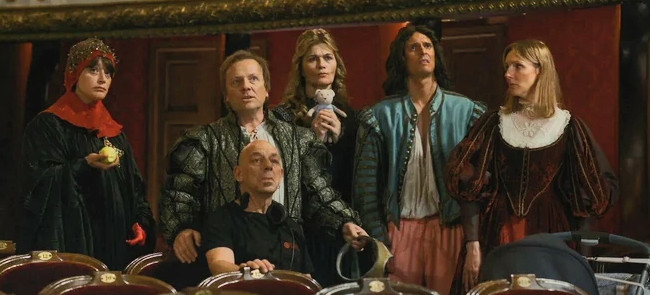 Quintessentially French, this backstage comedy is set in the grand Parisian theatre, and its entire cast carries the notable "de la Comedie-Francaise" tag. Directors Martin Darondeau and Bertrand Usclat keep the film tightly contained in the wings, playing up the irony while also indulging in some sharply riotous slapstick. And the brisk, spiralling narrative keeps us involved thanks to a terrific cast that's clearly having a ball. Trouble starts three hours before Nina (Clement) is due to stage her directing debut with the Scottish play at the prestigious Comedie-Francaise theatre. Lead actor Philippe (Stocker) is arguing about lighting and makeup, while his main costar is stuck in Brittany. So Nina must step in to play Lady Macbeth. Meanwhile, Philippe's actress wife Emilie (Hands) is having a fling with young actor Antoine (Frison). Bit player Suzanne (D'Hermy) can't make any sense of Shakespeare, turning to actor-wannabe usher Issa (Yeboah) for help. And veteran actress Nadine (Lebrun) is stoned. Will the show go on? Squeezed in from all sides, Nina is juggling the flailing cast, a demanding theatre administrator (Bagdassarian), novice makeup artist (Pondi) and even her own infant son. There's also a steady stream of hilarious technical issues for which stage manager Jacques (Hecq) unhelpfully defers to her as director. The film plays up the chaos until everything overflows, leading to a surreal moment involving Moliere (Lavernhe), who inspired the company's founding in 1680. Clement adeptly keeps Nina likeable as the film's script piles an endless stream of indignities upon her. So we understand why she wants to give up, and also why she can't. She needs to dig deep to get through this evening. All of these characters have surprising edges that give these expert actors plenty to chew on, with a range of both comical and dramatic textures that can never crush their determination to get the play up and running. Cast and crew members are also determined to express their creativity in their own ways, and Nina is struggling to bring them all into a united vision with so little time before the show goes up. Yes, this is all rather exaggerated, because most of these issues would have been resolved long before this point in time. But the script continually packs witty theatre gags in among the nutty mayhem, while also finding layers of emotional resonance in unexpected places. It may be a bit frothy, but it's also great fun.
| ||||||||||||
|
Fatherland Ojczyzna Review by Rich Cline |
MUST SEE
CANNES FILM FEST Is it streaming?
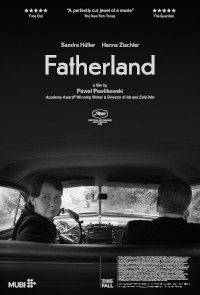
| 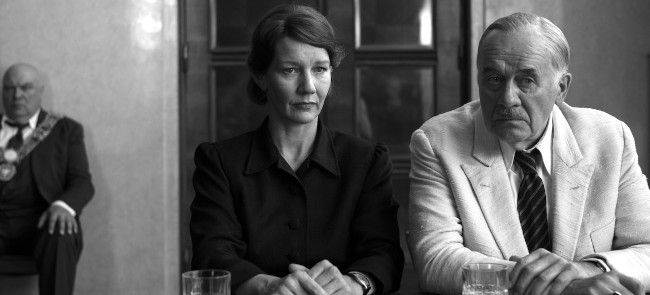 This is the third Cold War drama from filmmaker Pawel Pawlikowski and gifted cinematographer Lukas Zal, and it's once again shot in sumptuous black and white with an impeccable attention to period detail in both imagery and tone (see also Ida and Cold War). The story centres around the iconic writer Thomas Mann returning to post-war Germany, and it has moving things to say about parents, children and legacy. To celebrate Goethe's 200th birthday in 1949, Thomas (Zichler) agrees to travel to his fatherland, after vowing that he would never return. He is accompanied by his daughter Erika (Huller), and welcomed as a national hero. Their first stop is wartorn Frankfurt, where Thomas delivers a lofty speech. Then he has an even punchier one planned for Weimar, which is now in the Soviet-occupied east. Through all of this, big ideas about culture and politics swirl through every conversation with friends and colleagues, but Erika is preoccupied by thoughts about her troubled brother Klaus (Diehl). Tonally, the film bristles with wry humour, which runs quietly through the dialog, performances and a steady flow of inventive visual ironies. So while the pacing is gentle and reserved, there is plenty of fire under the surface. This plays especially to Huller's distinctive strengths as an actor, as she is able to reveal Erika's underlying thoughts and feelings, even when she's saying nothing. Indeed, much of the dialog centres around speeches and discussions that explore philosophical and moral issues relating to society. But the subtle emotions keep us gripped. Zischler also has a terrific presence as Thomas, a straight-thinking man who avoids any nonsense that tries to push him into a corner. When asked whether he prefers capitalism or communism, he rejects both as imperfect human concoctions. And when confronted with a personal tragedy, he remains stoic and focussed. Until he can't. Diehl's vivid presence as Klaus in the extended opening shot is so indelible that he haunts the entire film. All of this is so delicate that it often feels like the film is almost weightless. Even as it is tackling massive socioeconomic issues, vividly depicting the contrast between western and eastern Germany, this is a story about a family that has been strongly affected by world events, fame, fortune and expectations. All of these things feed into the gorgeously pungent final moments, which will linger in the mind for a very long time. [12 themes, language] 13.Oct.26 Cannes/London
| 
See also: SHADOWS FILM FESTIVAL © 2026 by Rich Cline, Shadows
on the Wall
HOME | REVIEWS | NEWS | FESTIVAL | AWARDS
| Q&A | ABOUT | TALKBACK | | ||||||||||