| SHADOWS ON THE WALL | REVIEWS | NEWS | FESTIVAL | AWARDS | Q&A | ABOUT | TALKBACK | |||||||||||||||||||||
 Shadows off the beaten path Shadows off the beaten pathIndies, foreign, docs and shorts...
On this page:
DJ AHMET |
A MAGNIFICENT LIFE |
PERRO PERRO
| |||||||||||||||||||||
| See also: SHADOWS FILM FESTIVAL | Last update 25.Mar.26 | |||||||||||||||||||||
|
DJ Ahmet Review by Rich Cline | 
| |||||||||||||||||||||
 dir-scr Georgi M Unkovski prd Ivan Unkovski, Ivana Shekutkoska with Arif Jakup, Agush Agushev, Dora Akan Zlatanova, Aksel Mehmet, Selpin Kerim, Elhame Bilal, Metin Ibrahim, Adem Karaga, Atila Klince, Nadzi Shaban, Din Ibrahim, Erdoan Maksut release US Jan.25 sff, UK 27.Mar.26 25/North Macedonia 1h39 SUNDANCE FILM FEST  Now streaming... |
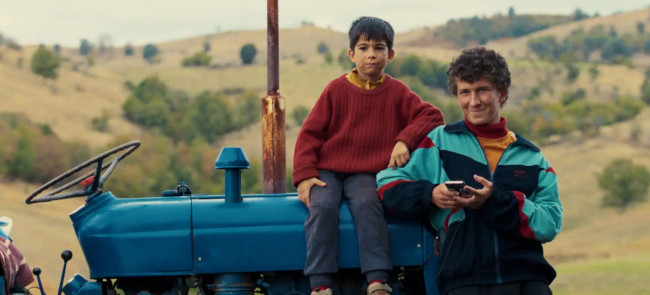 Set in a small Macedonian village, this offbeat comedy-drama is packed with resonant themes as it explores the collision between old-world traditions and the youthful desire for independence. Using an almost documentary style, writer-director Georgi Unkovski makes witty observations at every turn, filling the story with terrific sequences that ripple with personality, culture and artistic expression. And it further wins us over by creating superb connections between characters. After his mother's death, 15-year-old Ahmet (Jakup) and his younger brother Naim (Agushev) maintain her memory through music, which she loved. But their stoic father (Mehmet) removes Ahmet from school to care for the family's sheep. He also insists that Naim visit a healer (Shaban) because he has stopped speaking. One night during a rave in the woods, Ahmet meets Aya (Zlatanova), a neighbour who has returned home from Germany for her arranged marriage. She loves music too, and begins practicing a rebellious dance with her friends, accompanied by Ahmet's tunes. And the villagers react. Trouble emerges on multiple fronts, as Ahmet's father furiously makes him live with the flock after one sheep escapes then returns bright pink. And Aya's father (Kerim) has his eye on Ahmet, growing increasingly angry at his interference in the elaborate wedding plans. There's also the local muezzin (Klince), who needs the tech-savvy Ahmet to set up his computer to make the daily calls to prayer. The locals are a terrific mix of traditional folk who might not be as close-minded as they seem. Jakup has a bright screen presence as the teen who knows that he doesn't quite fit in without his mother's help. And as he falls for Zlatanova's flirty, feisty Aya, he begins to see another way of approaching his future and protecting Agushev's wonderfully cheeky Naim, although it means standing up to his dad. Even the harsher characters have likeable qualities to them, so it's easy to get involved in their layers of interaction, rooting for a peaceful resolution. Although things begin to get scarily violent along the way, the film continually reverts to its light-handed vibe in sequences that pulse with an engagingly earthy musicality. The plot features several mini-adventures as these young people find ways to be free from the pressures piled upon them. And there's just enough hope in the community to keep things from feeling too oppressive, even if the older generations still need to learn how to lighten up a bit.
| ||||||||||||||||||||
|
A Magnificent Life Marcel et Monsieur Pagnol Review by Rich Cline | 
CANNES FILM FEST Is it streaming?
| 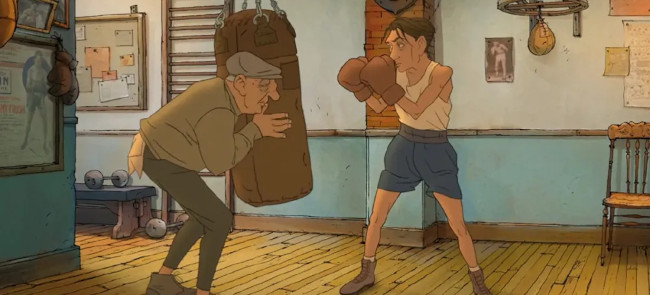 Based on memoirs by legendary author-filmmaker Marcel Pagnol, this skilfully animated biopic gallops briskly through his story, relying heavily on dialog. Writer-director Sylvain Chomet fills the screen with inventive touches that catch the interest, covering the history of France and the development of cinema in Europe, including efforts to counter American influence. Even more interesting is the way the film depicts the workings of a curious, creative mind. In 1956, 61-year-old Marcel is dodging a journalist who wants to interview him for Elle magazine. Hiding in his office to write, his mind drifts back to his childhood in Marseilles and work as a teacher before moving to Paris with his wife Simone. She loses patience with his aspiration to be a playwright. Then stage success feels constraining, so he turns to cinema, intrigued by possibilities of new talking pictures. And he's so successful that he builds his own studio back in Marseilles, working with his childhood friends. Then the war brings new challenges. Beautifully rendered in colourfully detailed line-drawings, the animation cleverly depicts unexpected inspirations and constant distractions. When he starts making movies, the way various productions are depicted is fascinating, especially in the way he takes a stand against the Germans and nearly loses himself in the process. And actual clips of Pagnol's films are woven into the imagery. As the story leaps through his life, he often encounters the ghost of himself as a cheeky 12-year-old who meets others who dies along the way. The script leaps around, never allowing much time to develop characters and leaving various events feeling rushed. Only a few figures stand out from the huge crowd of people who come in and out of Pagnol's life. And even Pagnol never becomes particularly memorable, due to his dryly methodical way of facing the world. So it's no surprise when yet another wife or girlfriend abandons him, but he does develop strong connections with his creative collaborators. Pagnol's life traces the history of cinema itself, and it offers a powerful reminder that spectacle and gimmicks aren't enough without a script that has something to say. This film says a lot about looking back at life without regrets, and in Pagnol's case this includes his insistence on expressing his creativity through plays, movies and, after a devastating tragedy, a series of beloved autobiographical novels. Most importantly, this is a lovely reminder of how important it is to never lose the bright-eyed curiosity of our youth.
|
| Perro Perro Review by Rich Cline |
|  dir-scr-prd Marco Berger with German Flood, Juan Ramos, Bianca Brandimarte, Matias Quiroga, Aldana Dante, Marcela Avani, Antonia De Michelis, Carlos Naso release US 20.Mar.26, UK Mar.26 flare 25/Argentina 1h41  Is it streaming?
| 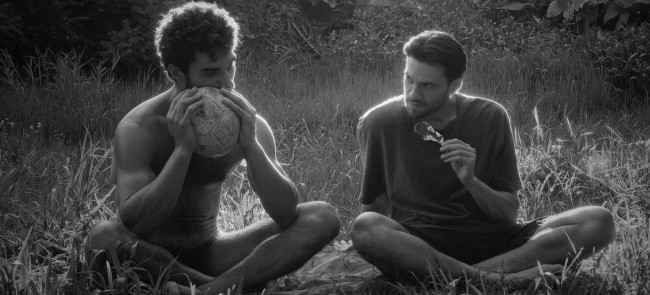 Shot in glistening black and white by cinematographer Martin Farina, this surreal drama is so playful that it immediately makes us smile. Argentine master provocateur Marco Berger continues to explore masculinity and connection by blurring lines of sexuality, in this case teasingly lusty inversion of reality. Even if the metaphor is strained, the timeless filmmaking style gives a kick to deeper ideas. It's also sweet and very sexy. On summer holiday in a river system, Juan (Flood) spots a beautiful naked man (Ramos) behaving like a lost dog, so Juan adopts him. His friend Rama (Quiroga) notes that he looks well cared for, so must have been abandoned. But Juan's girlfriend Jazmin (Brandimarte) is sceptical about letting this strange man into the house. He's a very good boy, but she worries that Juan will name him and decide that he wants to keep him. Indeed, Juan and the man bond, and now Juan has to make a decision before returning to the city. This man is referred to as a man, never a dog, but he's a pet. Juan ruffles his hair, plays with a ball and cuddles with him. And the way the man looks longingly at Juan is endearing. This witty alternate reality is full of nuance, especially with talk of more prickly, independent women pets. In an early scene, Jasmin's friend Natalia (Avani) speaks about her general unease about men who might attack her. So they have to figure out a way to make her feel safe when she visits. Shot and edited in a skilfully fluid style, the film looks terrific. Ramos gives a wonderfully committed stark-naked performance, and it's easy to see why everyone comments on how cute he is. Without saying a word, he vividly expresses his earnest feelings and yearning sensitivity. And Flood's open-hearted Juan responds to his affection. By contrast, Brandimarte's more hesitant Jazmin would rather have a woman around the house, because a man takes up too much space. Issues gurgle beneath the surface, as the nutty premise puts unspoken thoughts into physical form, most notably as Juan struggles between his heart's desire and what is expected of him. In one lovely sequence, Juan bathes and trims the man's nails before allowing him in the house. By contrast, he also has to tie him up outside to keep him out of sight. Where this goes is offbeat, pointed and almost elegiac, with complexities to ponder. And we might want an adorable pet man of our own.
| 
See also: SHADOWS FILM FESTIVAL © 2026 by Rich Cline, Shadows
on the Wall
HOME | REVIEWS | NEWS | FESTIVAL | AWARDS
| Q&A | ABOUT | TALKBACK | | ||||||||||||||