| SHADOWS ON THE WALL | REVIEWS | NEWS | FESTIVAL | AWARDS | Q&A | ABOUT | TALKBACK | |||||||||||||||||||||||||||||
 Shadows off the beaten path Shadows off the beaten pathIndies, foreign, docs and shorts...
On this page:
THE LAST BLOSSOM |
MIRRORS NO 3 |
RESURRECTION
| |||||||||||||||||||||||||||||
| See also: SHADOWS FILM FESTIVAL | Last update 22.Mar.26 | |||||||||||||||||||||||||||||
|
The Last Blossom Review by Rich Cline | 
Is it streaming?
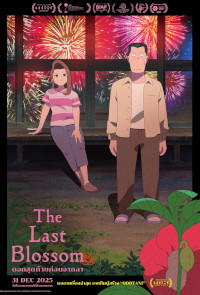
| 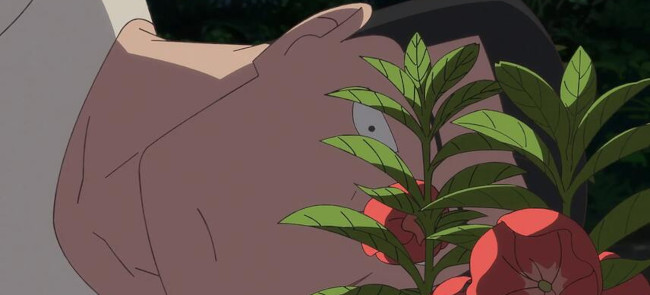 Using traditional-style anime imagery with added eye-catching digital flourishes, this film recounts the life story of a likeable, soft-spoken gangster who isn't quite what he seems to be. Using strong musicality, director-cowriter Baku Kinoshita creates a lovely, low-key drama that also includes a series of tense situations, betrayals and murder. And what catches the imagination is the depiction of a deep love that only barely ripples the surface. In a prison cell, Akutsu (voiced by Tozuka) remembers the trajectory of his life, starting in 1986 when he (then Kobayashi) took in Nana (Mitsushima) and her baby. A mid-level yakuza, Akutsu becomes successful in the booming economy, spending it all on nightlife with the boys. He barely considers Nana and her now-toddler son Kensuke (Hanae) until he learns that the boy has a heart condition. In heed of cash for a transplant, his mentor Tsutsumi (Yasumoto) suggests killing a younger gangster (Saito) to empty his safe. But the situation takes a hard turn. An attention-seeking flower (Taki) narrates the story, lecturing Akutsu in his cell about how badly he neglected Nana and how messy things became with Tsutsumi. But Akutsu insists that he had a longer game in mind. This fantastical element is a bit jarring, but it helps put us inside Akutsu's mind, as the flower represents continuity with his simpler past. It also offers a link to Nana (later Miyazaki) and Kensuke (Fujita) over the decades, including some surprising twists in the tale. Akutsu's stony silence and repressed emotions distress Nana, but he has affection for her and Kensuke. The disparity is due to grave secrets he keeps to protect her from his violent life. Incapable of expressing his love in words, he proves it instead. Where this goes involves a central mystery that unfolds gently. It's a thoroughly satisfying story that could have easily been rendered in live-action but takes on a more timeless tone using this cinematic take on vintage animation. Strong emotions burst out from time to time, and they're beautifully underplayed. As a result, Kinoshita creates an inventive depiction of hope over the course of four decades. Akutsu is happy to sacrifice his life in prison if it means safety for Nana and Kensuke, even though he never verbalised his true love for them. It's a lovely ode to the way the world often gets it completely wrong when it labels someone as a failure.
|
| Mirrors Nº 3 Miroirs Nº 3 Review by Rich Cline |
|  dir-scr Christian Petzold prd Florian Koerner von Gustorf, Michael Weber, Anton Kaiser with Paula Beer, Barbara Auer, Matthias Brandt, Enno Trebs, Philip Froissant, Victoire Laly, Marcel Heuperman, Hendrik Heutmann, Christoph Glaubecker, Christian Koerner, Yee Him Wong, Patrick Reu release Ger 18.Sep.25, US 20.Mar.26, UK 17.Apr.26 25/Germany 1h26 CANNES FILM FEST TORONTO FILM FEST  Is it streaming?
| 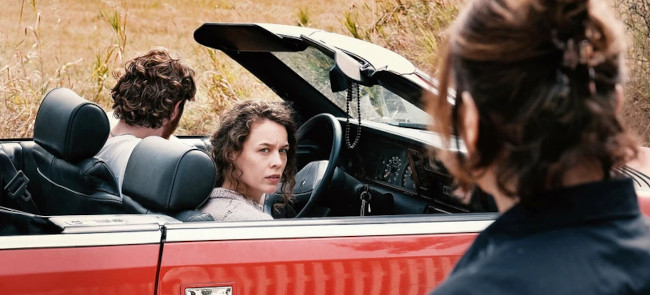 Observed with an unusual attention to detail, this German drama gets deep into the perspective of its subtly nuanced central character, once again combining a powerful performance from Paula Beer with skilled writer-director Christian Petzold. The film has a remarkably hushed sensibility, with roundabout conversations, curious glances and hidden motivations. So it is clear that there's something going on under the surface, creating a riveting mystery vibe. After her boyfriend (Froissant) dies in a car crash, piano student Laura (Beers) is taken in by Betty (Auer) at her nearby house. Haunted by guilt about the accident, Laura pitches in to help Betty. When Betty invites her husband Richard (Brandt) and son Max (Trebs) over for dinner, Laura realises that this situation means more to them than she understands. But because she is so warmly welcomed, she settles into this life, becoming part of the family. Then when Laura learns the truth, she has to make a decision about what to do next. Titled after the Ravel suite, this is the kind of film that swirls with involving, underlying ideas. Laura's awareness shifts gently from a premonition to general wariness. When Betty accidentally calls her Yelena, her Good Samaritan reactions take on a new meaning. Locals stop and look curiously at Laura. She knows it's odd that she doesn't grieve her boyfriend's death, and also that she doesn't want to go home to Berlin. Performances are built on silences as much as dialog, since the characters often sit together without speaking. Actors add tiny details that reveal complex emotion; all are afraid to express what they really think. As a city girl stranded in the countryside, Beer has a thoughtful and guarded demeanour that ripples intriguingly opposite the radiant Auer's casually kind Betty, Brandt's rather bluntly open-handed Richard and especially Trebs' sullen but helpful Max. The growing friendship between Laura and Max is fascinating, as is Betty's echoing concern for Laura. All four are dealing with enormous issues that they never talk about. There are moments of strong connection, and also scenes in which they recognise the distances between them. When Laura discovers what's been so long unsaid within this family, there's a chillingly brittle confrontation that bristles with dark thoughts. Petzold shoots and edits this in a simple but extraordinarily powerful way that reflects how everyone must ultimately take responsibility for their own feelings. And we also have to acknowledge the emotions we evoke in each other.
|
| Resurrection Review by Rich Cline | 
|  dir-scr Bi Gan prd Charles Gillibert, Yang Lele, Shan Zuolong with Jackson Yee, Shu Qi, Mark Chao, Li Gengxi, Huang Jue, Chen Yongzhong, Zhang Zhijian, Guo Mucheng, Chloe Maayan, Nan Yan, Bi Yanmin, Chen Guohua release Chn 22.Nov.25, US 12.Dec.25, UK 13.Mar.26 25/China 2h40 CANNES FILM FEST Now streaming...
| 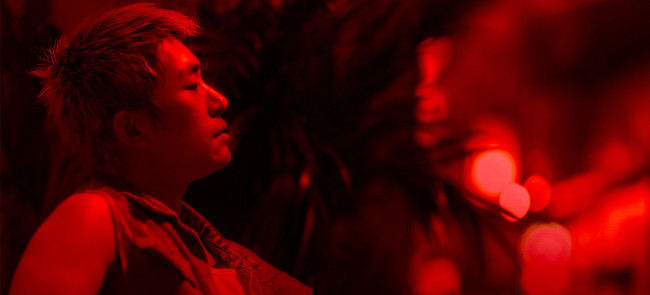 Chinese filmmaker Bi Gan ambitiously takes on an entire century in this epic odyssey, which holds the interest over a long running time because it's essentially four shorter movies with a framing story. While several elements are incomprehensible, the imagery and characters are consistently fascinating, and the surreal narrative flourishes catch the imagination. It should also be noted that the original Chinese title translates as Wild Times. After humanity has given up dreaming for longevity, a woman (Shu) finds a hideous "Deliriant" (Yee) who uses movies to maintain his imagination. In 1930s-style, the Deliriant is Qiu, questioned about murder by a distracted police commander (Chao). Two decades later, the Deliriant is a monk guiding looters to an abandoned temple, where he releases a familiar-looking spirit (Chen). After another 10 years, he's scam artist Jia, using an orphan girl (Guo) to con an old man (Shang). And on New Year's Eve 1999, the Deliriant is young Apollo, who falls for a mysterious girl (Li). Each section is shot in a distinctive visual style, with the framing story told using silent movie imagery, including gothic sets and dialog on title cards. Aspect ratios and film stocks shift along with sets, costumes and lighting. And the bravura New Year's Eve section is told in a fiendishly inventive continuous take that races through streets and buildings, then includes a vivid time-lapse moment. It's visually dazzling so, even if the narrative remains out of reach, the swirling ideas are haunting. Performances also change styles to match the cinematic era. Yee's work is particularly astonishing, as he transforms his body and attitude for each incarnation. Along the way, he finds offbeat connections with other characters, evoking big emotions that range from crippling pain to warm affection and bristling lust. There's a nice complexity in the bonkers rollercoaster between Apollo and Li's feisty mystery girl. And the sequence with young Guo is the most engaging, as it carries both brittle humour and underlying grief. Because the filmmaker is so deliberately assembling this as a love letter to cinema itself, it often feels like an academic project, echoing a wide range of images, techniques and textures to evoke a hundred years of movie history. What it's missing is a solid through-line that we can grab hold of. Still, we marvel at the audacious way everything is shot and played, and there are emotional kicks along the way that linger.
| 
See also: SHADOWS FILM FESTIVAL © 2026 by Rich Cline, Shadows
on the Wall
HOME | REVIEWS | NEWS | FESTIVAL | AWARDS
| Q&A | ABOUT | TALKBACK | | ||||||||||||||||||