| SHADOWS ON THE WALL | REVIEWS | NEWS | FESTIVAL | AWARDS | Q&A | ABOUT | TALKBACK | |||||||||||||
 Shadows off the beaten path Indies, foreign, docs and shorts...
On this page:
THE BELOVED |
THE DIVINE TRAGEDY |
A MAN WALKS DOWN THE STREET
| |||||||||||||
| See also: SHADOWS FILM FESTIVAL | Last update 18.Nov.26 | |||||||||||||
|
The Beloved El Ser Querido Review by Rich Cline | 
| |||||||||||||
 dir Rodrigo Sorogoyen scr Isabel Pena, Rodrigo Sorogoyen prd Nacho Lavilla, Eduardo Villanueva with Javier Bardem, Victoria Luengo, Malena Villa, Pepa Gracia, Raul Arevalo, Raul Prieto, Melina Matthews, Marina Fois, Nuria Prims, Laura Birn, Mourad Ouani, Pablo Gomez-Pando release Sp 26.Aug.26, UK 5.Mar.27 26/Spain 2h12 CANNES FILM FEST TORONTO FILM FEST  Is it streaming? |
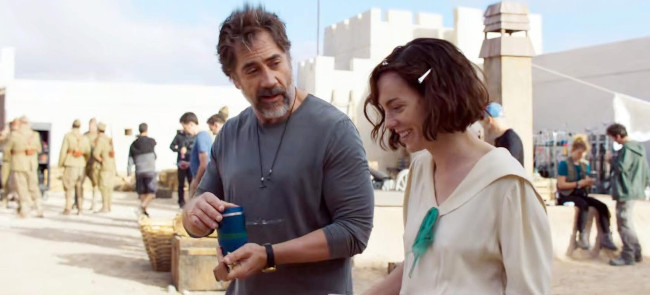 Honing in on the relationship between an estranged father and daughter, filmmaker Rodrigo Sorogoyen sets this Spanish drama on a film set, which gives the story some intriguing, inventive angles. It also helps that the roles are played by Javier Bardem and Victoria Luengo, who can say one thing while meaning something else. So even if the film is talky and overlong, it's packed with darkly resonant meaning. After moving to Hollywood and becoming a successful director, Esteban (Bardem) returns home to Madrid to work on his next film, a colonial-era epic set in the Sahara but filmed in the Canary Islands. He asks his 30-year-old actress daughter Emilia (Luengo) to play a pivotal role. She hasn't seen him in 13 years, and doesn't have very fond memories of him from childhood, but she can't pass up this opportunity to seriously boost her career. As filming kicks off, they begin to grow closer, but his tyrannical director persona is waiting to flare up. From the start, it's clear that Esteban is incapable of apologising for even his very worst behaviour. As a result, he has burned bridges throughout his career, including with Emilia's mother (Prims), who starred in his breakthrough project. Sorogoyen shoots this often in extreme closeup, cleverly forcing intimacy on people who don't want to be so near each other. And much of the story unfolds in fragments of scenes that create a tapestry, a bigger picture of Esteban's and Emilia's personalities and the strained connection between them. Both Bardem and Luengo dive into even the wordiest scenes with intelligence and charm, revealing their internal thoughts and feelings in ways that continually take us aback. Bardem gives Esteban alpha-male bluster, signifying a sensitive soul that isn't there. Or maybe it's so deep that he doesn't know how to tap into it. Luengo is more openly emotive, but she's also guarded around this man who has wounded her so deeply. That they are performing this dance on a crowded film set adds all kinds of intriguing textures, drawing in fascinating costars and crew members we'd like to know more about. But the film's perspective remains very tightly on this father and daughter, excavating the feelings they can't express. Esteban is so closed off and slippery that we almost will Emilia to slap some sense into him. So while the film is far too long, there's never a moment that isn't utterly riveting.
| ||||||||||||
|
The Divine Tragedy La Divina Tragedia Review by Rich Cline |
| |||||||||||||
 dir-scr Sergio Tovar Velarde prd Edgar Barron, Sergio Tovar Velarde, Max Blasquez with Artus Chavez, Pablo Gomez, Eduardo Espana, Helena Puig, Christian Ramos, Monica Dionne, Rosendo Gazpel, Meteora Fontana, Mauricio Rico, Zeus Huemantzin, Alejandra Bogue, Sergio Tovar Velarde release Mex Jun.26 mmf, US 6.Nov.26 26/Mexico 1h41 Now streaming... |
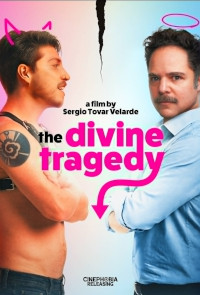
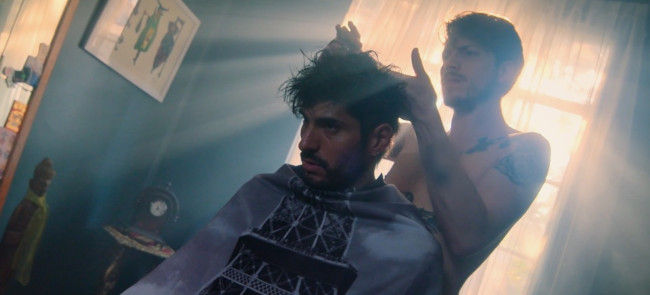 Despite the title, this Mexican movie is actually a sexy comedy about two gay brothers who need to get their lives on track. Writer-director Sergio Tovar Velarde tells the story with a colourful snap of attitude, keeping everything enjoyably character-based, cautionary but never moralising about lifestyle choices, while keeping in mind things that are actually important. So this unusually honest film is both funny and darkly moving. Thrown out of the house by his husband Carlos (Gazpel) for being obsessive and controlling, aspiring actor Cristian (Chavez) has little choice but to move in with his promiscuous half-brother Roy (Gomez), a barber who lives in his flat. But Cristian is now disrupting Roy's drug-fuelled addiction to casual sex, which is also complicated when Roy makes a connection with new neighbour Esteban (Ramos). Meanwhile, Cristian is taking theatre classes and trying to move forward by launching a cannabis-infused bakery with Roy's friend Jacobito (Espana). And both Cristian and Roy have big decisions to make. After 24 years together, Cristian is sure Carlos will come back around, and he struggles to accept that he might have finally pushed him away. Meanwhile, Roy has embraced his free-spirited nature for so long that he catches himself off-guard when he begins to feel something for someone. Soon, the brothers begin to have an impact on each other, although it's definitely not smooth sailing. All of this is filmed with a mix of wry observational comedy and sparky sex-positive vibes. Chavez and Gomez are excellent as likeable but very different men, giving unflinching performances that engagingly embrace their characters' flaws. Cristian and Roy are both taking vivid emotional journeys, and it's fun to see them realise that they can help each other. Supporting roles are witty, flirtatious and full of life, adding intriguing angles to every scene. Most unusual is how Espana's Jacobito navigates his dream-life with an imaginary pornstar (Huemantzin). Roy's fortune-telling friend Rosita (Puig) tells Cristian to get back in touch with the last version of himself that he liked. And she tells Roy to stop wasting himself. Watching these brothers blossom is involving, especially as their prickly connection deepens into something meaningful. And in the process, they begin to believe in themselves. The question is whether they'll choose the past or a more promising future. And without being predictable about it, the film becomes a powerful reminder to seek the very best in yourself and the people you love.
| ||||||||||||
|
A Man Walks Down the Street Review by Rich Cline |
Is it streaming?
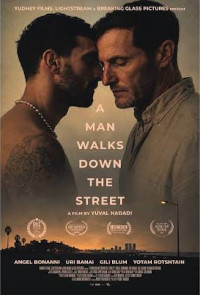
| 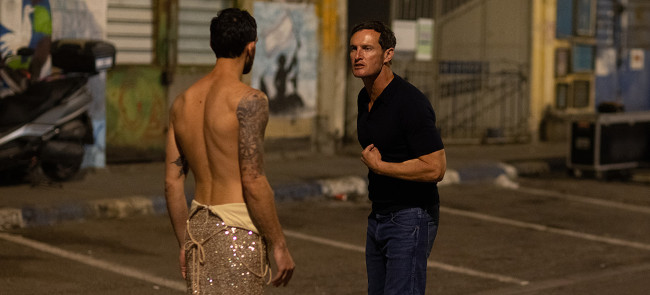 Flickering between two timelines, this thoughtful, sexy Israeli drama centres around a man whose internalised homophobia has prevented him from living fully. Writer-director Yuval Hadadi fills the screen with details that feel like they come from personal experience, maintaining an introspective approach that brings emotions quietly to the surface. While the storytelling is sometimes bit underpowered, this is a powerful and moving exploration of how fear limits us. After 30 years in Holland, Raanan (Bonanni) returns to Tel Aviv to clear out his late mother's flat. He's immediately faces long-repressed memories, from a box of childhood stuff to a familiar old man (Saydof) in the street. And Raanan is still struggling with his sexuality, meeting men but paralysed by anxiety. Then he befriends the tattooed young Adir (Rotshtain), who disarms him with an easy friendliness. As they find a spark between them, Raanan also gets up the nerve to speak to his elderly neighbour, but confronting their past together is a bigger challenge. Alongside this narrative, flashbacks follow 22-year-old Raanan (Blum) as he does his military service, intrigued by other men but frightened of his own shadow. Letting his guard down in a relationship with the older Itzik (Banai) forces him to confront his self-loathing. Even in today's open-minded culture, Raanan is terrified of being perceived as gay in public, which is something Adir can't understand. Fear is also what keeps the gifted Raanan from becoming an artist; he teaches architecture instead. Bonanni and Blum give Raanan a darkly internalised honesty that's engaging, even as his uptight demeanour so severely limits him. So when Rotshtain's charmingly colourful Adir paints his nails black, Raanan likes what he sees but quickly removes the polish. And Adir calls him a coward. Meanwhile, the magnetic Banai's Itzik doesn't like that Raanan keeps him a secret. These are complicated characters in nuanced situations, so even when the script pushes a plot point, there is plenty to think about. When Raanan questions Adir's cross-dressing flourishes, Adir asks, "What's wrong with being feminine?" So the film quietly challenges a culture of machismo that insists on one definition of masculinity. In both timelines, Raanan is grappling with the picture he has painted of himself, and who he thinks everyone expects him to be. So it's no wonder that he visibly squirms in a gay nightclub. Finally, Raanan admits that he's unable to love himself, which means he might be on a path to healing.
| 
See also: SHADOWS FILM FESTIVAL © 2026 by Rich Cline, Shadows
on the Wall
HOME | REVIEWS | NEWS | FESTIVAL | AWARDS
| Q&A | ABOUT | TALKBACK | | ||||||||||