| SHADOWS ON THE WALL | REVIEWS | NEWS | FESTIVAL | AWARDS | Q&A | ABOUT | TALKBACK | |||||||||||||||||||||
 Shadows off the beaten path Indies, foreign, docs and shorts...
On this page:
KIKUYU LAND |
THE LAST FIRST: WINTER K2 |
MAKING MARIE ANTOINETTE
| |||||||||||||||||||||
| See also: SHADOWS FILM FESTIVAL | Last update 23.Oct.26 | |||||||||||||||||||||
|
Kikuyu Land Review by Rich Cline | 
| |||||||||||||||||||||
 dir Andrew H Brown, Bea Wangondu prd Moses Bwayo, Andrew H Brown, Bea Wangondu, Michael Morrisroe, Joseph Njenga with Bea Wangondu, Mungai, Stephen, Jecinta Gathoni, Melanie Jacques, Njenga, Officer X, Kariuki, Stella, Ester, Auntie N, Ali Ibrahim release US Jan.26 sff, UK 2.Oct.26 25/Kenya 1h33 SUNDANCE FILM FEST Now streaming... |
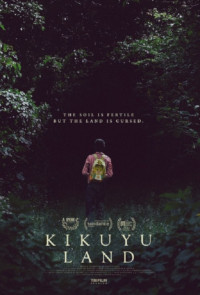
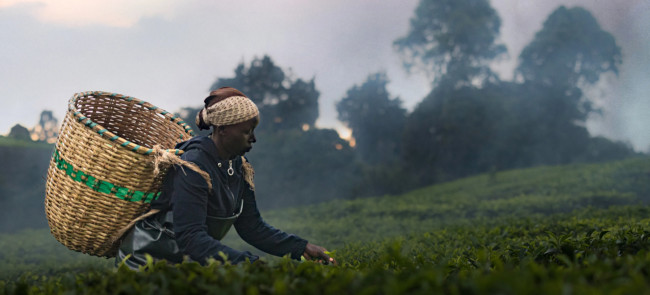 From a beautiful corner of Kenya, this soft-spoken but powerful documentary takes on an issue so touchy that few people are willing to go on the record about it. Tenacious journalist Bea Wangondu is investigating land British colonisers stole to build their tea plantations. Kenyan politicians promise to address this problem, but little has changed with so much money involved. And this film's clear-eyed, multi-generational approach is urgent. Filing claim on his family's land, Mungai has gathered evidence for a decade. He speaks to reporter Bea, who is from the same region. But when she looks into the story, she's labelled a troublemaker. She's even prevented from filming on public roads. Meanwhile, bright young teen Stephen attends school while his mother works in the tea fields. Bea tries to contact the current owners Unilever, even travelling to London without success. And the political situation in the country grows increasingly tense as the deadline approaches for the National Land Commission to make its ruling. It's painfully clear that the British saw the best land in Kenya and simply took it, chasing residents away and levelling their homes. In their place, they built sprawling plantations that take profits outside the country. And their workers live in poverty, threatened and violently controlled by local managers. In the past, while their children barely had food to eat, mothers were repeatedly raped by their privileged bosses. In her research, Bea is unnerved to discover that her grandfather was one of these managers. Her family is furious when she brings it up, but she gets her uncles to speak about it. Integrity has become a key issue in Kenyan politics, and yet true justice remains elusive. Bea speaks to an officer in the nation's security service who tells her to be careful, because it's perilous to criticise the government or multinational corporations they are in league with. He also describes a violent system that has kept Africa in poverty and chaos for decades, as the colonial plunder continues. Retiree Jecinta has the courage to speak out only because Unilever no longer owns her. While her stories are harrowing, as is the new president's harsh crackdown, there's still hope in Stephen's eyes, as he runs with his friends and looks to the future.
| ||||||||||||||||||||
|
The Last First: Winter K2 Review by Rich Cline |
SUNDANCE FILM FEST Now streaming...
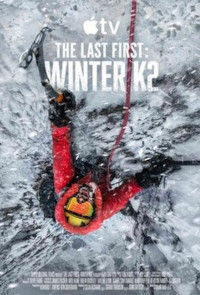
| 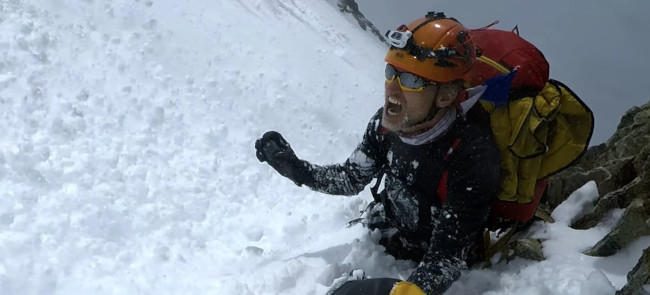 Tracing the story of a group of mountaineers who raced to make the first winter summit of Pakistan's K2 peak, this documentary combines new interviews with an astonishing archive of footage. Director Amir Bar-Lev assembles this in a journalistic way that creates a dramatic thriller that's pacey and involving. And it's populated by fascinating people, each of whom has their own reasons for attempting such a dangerous achievement. Amid Covid restrictions in 2021, top climber John Snorri took aim at the last unconquered achievement in mountaineering: topping K2 in the winter. With Pakistani Ali Sadpara and his son Sajid, he spent months laying the groundwork in base camp and higher up. Then a team of sherpas led by rock-star Nims Purja arrives, determined to claim the winter summit for Nepal. Soon, some 50 more eager hikers turn up, having booked through Arnold Coster and Seven Summit. It's arguable that the presence of these amateurs led to a tragedy that would claim five lives. A relatively straightforward doc, this film was compiled after the fact from scenes captured by the climbers and camera operators accompanying them. And there are present-day interviews spliced in to provide the narrative structure, although this does give away who survives the expedition before we get to that point in the story. This hindsight also allows for some analysis of what went wrong on the mountain, offering a complex look at a seriously messy situation. And the film does dig into these issues, concluding that there are no clear villains to take the blame. All of this is sharply assembled with a snap of energy and some properly building tension, plus an honest sense of the real-life tragedy. These climbers know that what they are doing is life-threatening; there's a good reason why no one had climbed K2 in the winter before 2021. And the mix of motivations is fascinating, from the simple love of climbing to national pride to the thrill of personal achievement. Several sequences in this film are heart-poundingly suspenseful, and the emotional core remains front and centre as we glimpse the inner lives of these mountaineers and their families. So it's ultimately involving and strongly moving too.
|
| Making Marie Antoinette Review by Rich Cline |
| 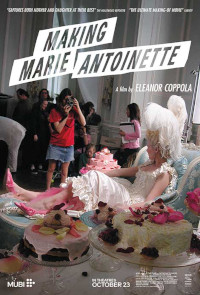 dir Eleanor Coppola prd Sofia Coppola, Rachel Dengiz, Youree Henley, Lorenzo Mieli, Mario Gianani with Sofia Coppola, Kirsten Dunst, Jason Schwartzman, Marianne Faithfull, Asia Argento, Aurore Clement, Judy Davis, Francis Ford Coppola, Roman Coppola, Gia Coppola, Milena Canonero, Lance Acord narr Diane Lane release US/UK 23.Oct.26 26/US 1h26 
See also: Is it streaming?
| 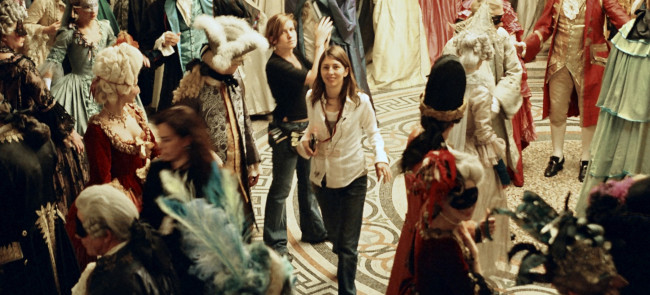 Filmmaker Eleanor Coppola shot some 80 hours of footage in 2005 on the set of her daughter Sofia's underrated classic Marie Antoinette, but only started editing it together in 2020. And Sofia finished this doc after her mother's death in 2024. It's a delightful look behind the scenes, revealing telling details about the work that goes into making a movie and personal insight into the cast and crew. An American filmmaker telling an iconic story from French history, Sofia is given unprecedented permission to shoot on location in Versailles. She wants to make a movie about Marie Antoinette (played by Dunst) in her own style, rather than do what's expected. Sofia is a rare woman in a profession dominated by men, and she's supported by friends and family, including her father Francis, cousin Schwartzman, brother Roman and niece Gia. She's also determined to stay on time and on budget, even with such huge crowds of extras and gloriously elaborate costume and wig changes. On-set, Eleanor was able to interview the key players in intimate moments. And her journals (read in voiceover by Lane) offer glimpses into her thoughts and feelings, noting that this was "a rare opportunity to see my child at work". She comments how small Sofia looks amid the expansive cast and crew with lavish production design and grand locations. She also notes the difference between generations: she had to push her artistic aspirations aside to raise her children, while Sofia is allowed to balance professional and personal goals. And the doc beautifully captures Sofia's gentle but clear-eyed approach. Relishing her opportunity to simply observe this film being made, Eleanor notes that shooting a documentary is like fishing: you're always waiting for something interesting to happen. In this case, she can see that the most interesting thing going on is inside the mind of her daughter. Infused with a modern sensibility that highlights personal and political themes, Marie Antoinette was far ahead of its time. And its inventive, impressionistic style can now be seen everywhere. Intriguingly, Sofia acknowledges that the film's scale was a big too big; she prefers being able to do more of the work herself.
| 
See also: SHADOWS FILM FESTIVAL © 2026 by Rich Cline, Shadows
on the Wall
HOME | REVIEWS | NEWS | FESTIVAL | AWARDS
| Q&A | ABOUT | TALKBACK | | ||||||||||||||