| SHADOWS ON THE WALL | REVIEWS | NEWS | FESTIVAL | AWARDS | Q&A | ABOUT | TALKBACK | |||||||||||||||||||||
 Shadows off the beaten path Shadows off the beaten pathIndies, foreign, docs and shorts...
On this page:
EXIT 8 |
THE LAST VIKING |
ORPHAN
| |||||||||||||||||||||
| See also: SHADOWS FILM FESTIVAL | Last update 23.Apr.26 | |||||||||||||||||||||
|
Exit 8 Review by Rich Cline | 
| |||||||||||||||||||||
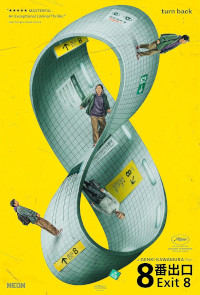 dir Genki Kawamura scr Kentaro Hirase, Genki Kawamura prd Yuto Sakata, Kenji Yamada, Akito Yamamoto, Taichi Ito with Kazunari Ninomiya, Yamato Kochi, Naru Asanuma, Kotone Hanase, Nana Komatsu, Hirota Otsuka, Tara Nakashima, Reo Soda, Mikio Ueda, Hikakin release Jpn 29.Aug.25, US 10.Apr.26, UK 24.Apr.26 25/Japan Toho 1h35 CANNES FILM FEST TORONTO FILM FEST  Is it streaming? |
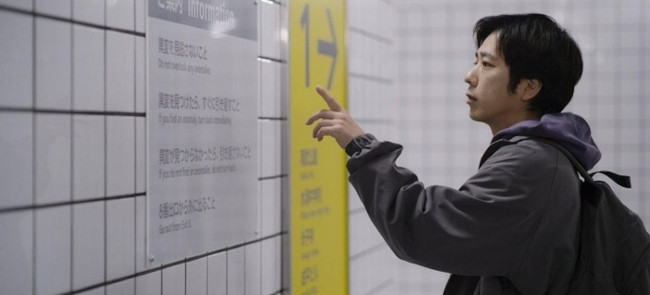 Opening with an extended first-person take, this claustrophobic Japanese thriller immediately gets under the skin as its central character struggles to find his way out of a maze-like metro station. Director Genki Kawamura inventively uses playful imagery, repetition and vivid side characters to create a deeply unnerving situation. The largely continuous camerawork amps up the tension, and frequent witty touches include a poster for an Escher exhibition. A young man (Ninomiya) is reeling from the news that his ex-partner (Komatsu) is pregnant when he finds himself stuck in circuitous tunnels. Signs tell him to look for anomalies to find his way out. Would that be the walking man (Kochi) who doesn't see him? Blood dripping from the ceiling? Or a baby in a locker? But he keeps finding himself back at the start. And he loses his cool when the hallway turns yellow. Then meeting a perceptive little boy (Asanuma) leads to a point-of-view shift, revealing that there are multiple players here. Amusingly, the film opens as the man doomscrolls through outrageous social media and tunes out a screaming infant with Bolero in his earbuds. Then his ex's phone call triggers an asthma attack. This weaves into a tapestry of clues, with astonishing freak-out moments that skilfully use imagery and sound. About halfway in, the camera shifts to follow the walking man and a teen girl (Hanase) who wonders if maybe they're dead. The engaging Ninomiya vividly conveys this man's frustration, underscored with the deeper things on his mind. When his phone finally reconnects, his ex jokes about his poor sense of direction before saying that she's waiting for him to help her decide what to do. The idea of becoming a father is a huge punch of conflicting emotions. And other characters have their own subtext. The virtually wordless Asanuma is utterly magnetic. Kochi gets to play up his issues with remarkable physicality. Playing out like levels in a time loop videogame, the changing numbers on an exit sign let these perplexed people know whether they're on the right track. The teen observes that everyday life is a series of repetitions anyway. So the film is cleverly constructed with a sense of momentum, a riveting forward motion even as events spin around on themselves. There's a real sense that the little boy is a key to all of this, and that compassionate humanity is the goal. So where this story goes is both intriguing and eerily involving.
| ||||||||||||||||||||
|
The Last Viking Den Sidste Viking Review by Rich Cline |
VENICE FILM FEST TORONTO FILM FEST Is it streaming?
| 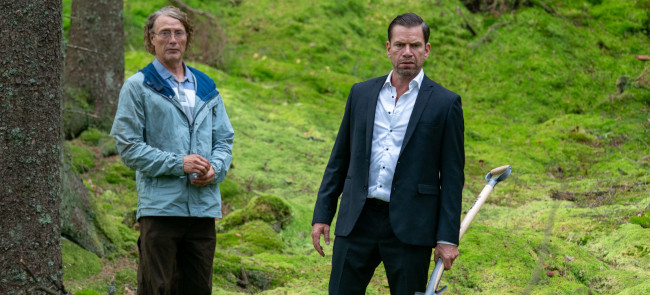 From Denmark, this pitch-black comedy is another exploration of lingering trauma by filmmaker Anders Thomas Jensen and his fine company of actors. While this film sometimes leans toward the cartoonish, it's underscored with spiky emotions that catch us by surprise as we are either laughing nervously or cringing at an explosion of violence. There's also some real power in the way it so unflinchingly depicts mental health issues. After 15 years in prison, hotheaded Anker (Lie Kaas) returns to his siblings Manfred (Mikkelsen) and Freja (Jorgensen) on a mission. He left his robbery stash for Manfred to hide but, due to dissociative identity disorder, Manfred now believes that he's John Lennon. To spark his memory Anker takes Manfred to the woodland house where they grew up. It now belongs to bickering couple Margrethe (Grabol) and Werner (Malling). And a dodgy shrink (Brygmann) suggests reassembling the Beatles from mental patients to spark Manfred's memory. But Anker's former associate Flemming (Bro) is on their trail. Much of what happens in this film is utterly bonkers, as the script flips through a riotous series of chaotic situations that are often genuinely grisly, such as extended flashbacks to the young brothers (impressive turns from Laeso and Johansen) with their abusive father (Ranthe). Meanwhile, everyone is assembling at this old house, including a mute drummer (During) who thinks he's Ringo and a multi-skilled musician (Razzazi) who's both Paul and George. When he's not Abba's Bjorn, that is. Even Margrethe and Werner have messy back-stories that feed into the confusion. Like improvisational ensemble players, these actors bounce hilariously off each other, creating offbeat connections and reacting outrageously to each other. Lie Kaas holds the centre as a hothead incapable of containing his rage. He loves his brother but has no patience with him. Mikkelsen is wonderful against-type as the soft-spoken Manfred, even as he also has serious impulse issues. The surrounding characters are brought to life with unusual attention to every quirky detail. At the centre of the story is the fact that Anker has repressed the darker memories from his childhood in a similar way that Manfred hides from them by becoming another persona. Animated bookend sequences play on Manfred's fascination with vikings and runes, spinning a tale about a chieftain who is determined to make his disabled son feel the same as everyone else. And the refreshing point is that all of us, without exception, are misfits.
|
| Orphan Árva Review by Rich Cline | 
| 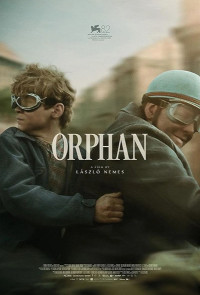 dir Laszlo Nemes scr Laszlo Nemes, Clara Royer prd Mike Goodridge, Gregory Jankilevitsch, Alexander Rodnyansky, Ferenc Szale with Bojtorjan Barabas, Andrea Waskovics, Gregory Gadebois, Eliz Szabo, Marcin Czarnik, Soma Sandor, Hermina Fatyol, Konrad Quintus, Loppert Martin Tibor, Gabor Ivanyi, Zsuzsa Szager, Attila Epres release Hun 23.Oct.25, US Oct.25 hiff, UK 15.May.26 25/Hungary 2h12 VENICE FILM FEST TORONTO FILM FEST Now streaming...
| 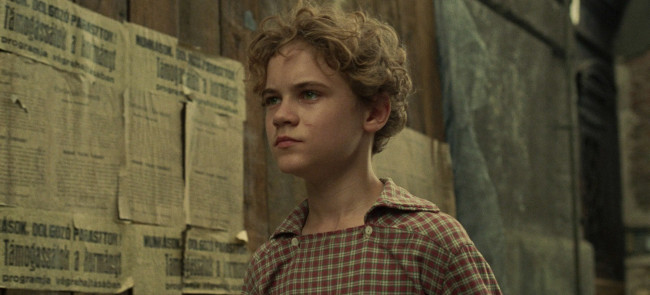 Impeccably produced, this Hungarian period drama boasts expert production design and costumes, with artfully astute direction by Laszlo Nemes as it traces the story of a young teen boy who reaches a crossroads along with his nation. It's a beefy parable that's loaded with meaning as it explores this nation's distinct history from World War II to Soviet occupation. And the story unfolds with unusually intense emotions. Following the crushed 1956 anti-Soviet uprising, young Andor (Barabas) becomes intrigued by the Judaism of his father, who was murdered by Nazis before he was born. Then his mother Klara (Waskovics) begins seeing the thuggish Berend (Gadebois), who rescued her during the war and claims to be Andor's real father. Meanwhile, Andor is helping his friend Sari (Szabo) hide her rebel activist brother Tamas (Sandor) from the Soviet police. He also learns that both Germans and Russians hate the Jews. But he doesn't understand that Klara's relationship with the vile Berend is about their security. Everything is seen through Andor's observant but flawed perspective. Even in prolog scenes, the younger Andor (Tibor) is frighteningly alert. So as his reactions become increasingly extreme, lashing out at anyone he sees as a danger, we worry about his wellbeing. This is especially true when he and Sari find a hidden gun, which they give to Tamas for his protection. But we know that the script must have another reason for it. Barabas has a remarkably steely presence, giving Andor magnetic, wilful charisma. Even if he over-reacts, his earnest emotions are visible in his strained face, reflected in his full physicality. So the way he connects to others is riveting. Waskovics is superb as his tenacious mother, who knows when to fight and when to give in. And Gadebois is terrifying as the imposing Berend, whose temper is almost as worrying as Andor's, but far more perilous. Nemes layers fascinating textures into this film, depicting the nation's experience in this boy whose identity is so confusingly scrambled. Some of the symbolism is a bit heavy-handed, but it still catches the imagination. Andor finds solace in the idea that he is Jewish, persecuted by both Nazis and Soviets, so the idea that he might be ethnically Hungarian literally turns his stomach. Does this mean that he is a very different kind of victim? Or maybe someone who has betrayed his own people on a genetic level? The questions are complex and darkly provocative.
| 
See also: SHADOWS FILM FESTIVAL © 2026 by Rich Cline, Shadows
on the Wall
HOME | REVIEWS | NEWS | FESTIVAL | AWARDS
| Q&A | ABOUT | TALKBACK | | ||||||||||||||