| SHADOWS ON THE WALL | REVIEWS | NEWS | FESTIVAL | AWARDS | Q&A | ABOUT | TALKBACK | |||||||||||||||||||||
 Shadows off the beaten path Shadows off the beaten pathIndies, foreign, docs and shorts...
On this page:
CHILDREN OF THE MONKEY |
DE GAULLE: LIBERTE |
HOUSE OF THE WIND
| |||||||||||||||||||||
| See also: SHADOWS FILM FESTIVAL | Last update 20.Sep.26 | |||||||||||||||||||||
|
Children of the Monkey I Figli Della Scimmia Review by Rich Cline | 
| |||||||||||||||||||||
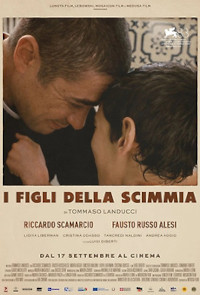 dir Tommaso Landucci scr Tommaso Landucci, Damiano Femfert prd Andrea Calbucci, Maurizio Piazza, Riccardo Scamarcio, Andrea Leone with Riccardo Scamarcio, Fausto Russo Alesi, Andrea Aggio, Tancredi Naldini, Lidiya Liberman, Cristina Odasso, Luigi Diberti, Manuela Aggio, Ignazio Puccia, Vincenzo Valenti, Ettore Scarpa, Roberto Pitta release It 11.Sep.26 26/Italy Rai 1h49  Is it streaming? |
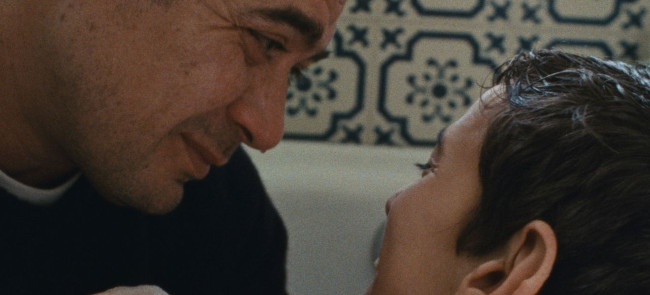 There's an almost hushed tone to this emotive Italian drama, which centres around a father who is struggling with the challenges life has brought his way, even though he knows better. Filmmaker Tommaso Landucci tells the story in a grounded, naturalistic way that feels sometimes rather underpowered. But this is a tightly focussed and gently observational film, and it's beautifully anchored by its astutely internalised performances. Dario (Scamarcio) and his wife Ginevra (Liberman) have a smart and smiley young son in the teenaged Enrico (Aggio), who has a form of cerebral palsy that requires continual care, plus regular scary hospital visits. Meanwhile, Dario also dotes on his 14-year-old nephew Giacomo (Naldini), son of his brother Roberto (Alesi), inviting him round for game nights, which Enrico usually wins. When Giacomo shows interest in his old stunt motorbike, Dario teaches him to ride, clearly wishing he could do this with his own son. But for Roberto, this begins to cross a line. Naturally, Dario and Ginevra's life revolves around Enrico. In the early scenes, Dario looks longingly between his son and his sporty and musically talented nephew. There's never the sense that he doesn't adore Enrico; it's that this isn't the life he imagined as a father. So he doesn't correct people who think Giacomo is his son. Every now and then, there's a somewhat under-defined scene involving clashes between Dario and Roberto in their business testing safety systems. And Dario's attention toward Giacomo draws out more long-simmering tensions between the brothers. Scamarcio navigates this tricky role without any sentimentality, finding honest edges within Dario that add layers of connection. Naldini plays Giacomo as a typical teen, surly but never nasty as he flexes his independence. Nonverbal and unable to do much for himself, Enrico is brought to life beautifully by Aggio, with a lovely spark of energy. The other characters sit largely around the edges, adding subtle layers of conflict that feel bracingly truthful. The feelings that run through this overlong movie are very easy to understand, especially Dario's conflicting attachments to his son and nephew. There are minor plot strands running in and out of the loose central narrative, adding some texture to this extended family's underlying drama. For both Dario and Roberto, the issue is that they have stopped being present in their own lives. And as they are forced to confront this, the film finds something important to say about fatherhood, and brotherhood as well.
| ||||||||||||||||||||
|
De Gaulle: Liberté La Bataille de Gaulle: J’Écris Ton Nom Review by Rich Cline | 
See also: 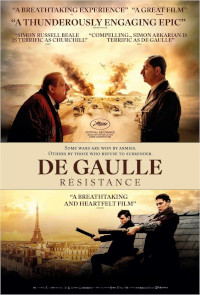 Is it streaming?
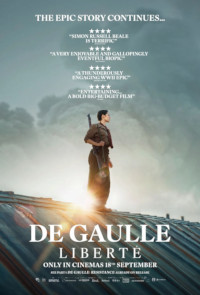
| 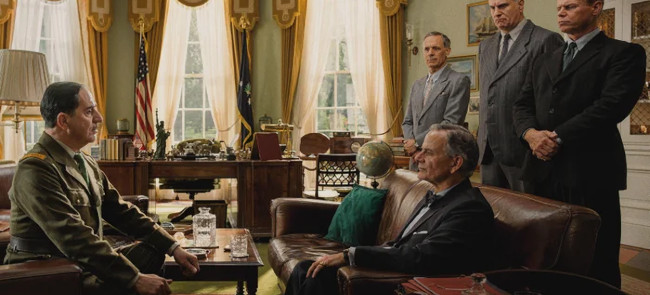 Concluding this two-part biopic about Charles de Gaulle, filmmaker Antonin Baudry takes on two more pivotal years in France's history. Again set on fronts in Britain, France and North Africa, this is a continuation of the big-scale approach, with expansive set-pieces and rather a lot of political wrangling. It's a riveting account of this moment in history, and each moment grips us with an involving emotional perspective. As war rages in 1943, de Gaulle (Abkarian) watches angrily from London as Churchill (Beale) and Roosevelt (Scott) meet in Casablanca to cooperate with French General Giraud (Lhermitte). But de Gaulle's Free France dismisses Giraud for his links to the Nazi-collaborating Vichy government. Meanwhile in France, resistance leaders Rex (Kysyl) and Livia (Vartolomei) are allegiant only to de Gaulle. And in Libya, de Gaulle's loyal General Leclerc (Schneider) bravely holds the line against a much larger German unit. But de Gaulle's real concern is that the Allies have plans to occupy France once it's liberated. De Gaulle's long game here is to maintain France's sovereignty, rejecting occupation by Nazis, Brits or Americans. He participates in forming a provisional French government, even though it means working alongside Giraud. But he never abandons his core principles. And his followers are just as determined to restore freedom to their country, whatever it takes. So the film is packed with superbly tense sequences, from battlefields to spy-craft to strained negotiations. Because of the film's earthy, grounded tone, performances bristle with real-life humour. Most enjoyable is the wry connection between Abkarian's quirky de Gaulle and Beale's razor-sharp Churchill, who likes de Gaulle but can't admit that to the Americans he needs so badly. Scott adds complexity to the stubborn Roosevelt. Vartolomei's quick-witted Livia gives the story a tenacious heart and soul. But the standout role belongs to Schneider, whose Leclerc is a smart and viscerally heroic figure we can't help but admire. As the story continues through 1944, it encompasses pressures around D-Day, after which Leclerc followed de Gaulle's plan, rushing to Paris ahead of the Allies to establish Free French sovereignty alongside the resistance. This provides a thrilling final act, punctuated by a terrific epilog involving de Gaulle and Churchill. It also nicely bookends the film after Leclerc's breathtaking opening standoff. In between, the political wrangling may go on a bit, but the passion of these people is powerfully involving. It's a reminder to act with integrity rather than just going along with the crowd.
|
| House of the Wind Maison du Vent Review by Rich Cline |
| 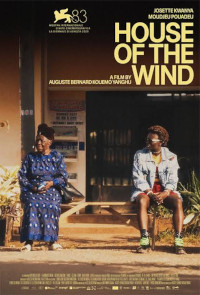 dir-scr Auguste Bernard Kouemo Yanghu prd Linda Kwanya Siakam, Auguste Bernard Kouemo Yanghu, Arthur Grec, John Engel, Faissol Gnonlonfin with Josette Kwanya, Moudjeu Pouadeu, Adrien Jolivet, Babetida Sadjo, Tatiana Rojo, Basseek Fils, Bienvenu Roland Sylvio Mvoe, Herve Keedi, Nadine Kwanya Tchoua, Moussa Sindjah, Beatrice Youmbi, Serge Bella release WP Sep.26 vff, UK Oct.26 lff 26/Cameroon 1h42  Is it streaming?
| 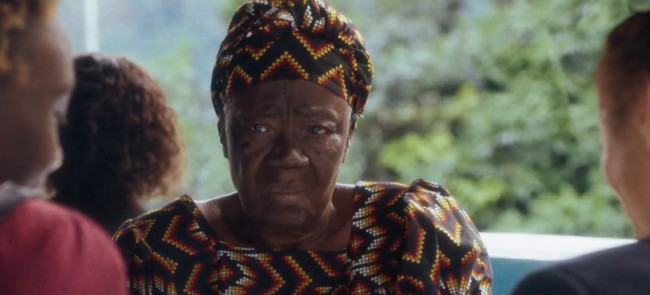 As the title suggests, this drama is set in a house through which a gentle breeze blows, as an elderly woman ponders the changing world. Using warm humour and emotions, the film beautifully captures details of life in Cameroon. While the film feels slightly over-long, its fascinating story has strongly personal insights alongside important points about the legacy of colonialism. And it encourages us to open our hearts. At 75, Josette (Kwanya) has a maternal position in her village. Like everyone, she sharply feels the distance from her six children, who are working in Europe. After street seller Sarah (Pouadeu) helps her at the bank, Josette lets her move in. And because Sarah's family rejects her, Josette poses as her mother to her French fiance Adrien (Jolivet). Josette isn't used to having strangers around, but they begin to properly bond on a night out on the town. Nothing goes quite as expected for either of them, but it's better than facing problems alone. At the local ladies association, Josette suggests that they contact their kids less frequently, so they will want to come back home. Almost everything she does is for them, including building a house for one son (Fils). This adds to the usual challenges of everyday life, even as some people give her extra help as an elder. Josette's home is a monument to her family, full of photos and mementos, a calm sanctuary away from the city's dusty, bustling streets. But Sarah certainly livens it up. No one on screen seems to be acting, so it feels like we are watching Josette's real life as she takes care of various local details while talking to her children on video calls. Kwanya quietly evokes Josette's hidden emotions, feeling everything keenly but simply getting on with it. At one point she takes a break to sit quietly by her husband's grave to think. So her growing friendship with Pouadeu's feisty Sarah is hopeful and engaging. While the film features several intensely serious moments, the tone remains generally optimistic. Even when Josette faces painful situations, such as when her kids put her in impossible positions, she steadily carries on. She also discovers that a found family is just as complicated and messy as her real one. And the story is a lovely reminder that sometimes we need to let others in to get through life.
| 
See also: SHADOWS FILM FESTIVAL © 2026 by Rich Cline, Shadows
on the Wall
HOME | REVIEWS | NEWS | FESTIVAL | AWARDS
| Q&A | ABOUT | TALKBACK | | ||||||||||||||