| SHADOWS ON THE WALL | REVIEWS | NEWS | FESTIVAL | AWARDS | Q&A | ABOUT | TALKBACK | |||||||||||||||||||||
 Shadows off the beaten path Shadows off the beaten pathIndies, foreign, docs and shorts...
On this page:
BEFORE THE WAR |
FALLING HOUSE |
SALON DE BELLEZA
| |||||||||||||||||||||
| See also: SHADOWS FILM FESTIVAL | Last update 27.Sep.26 | |||||||||||||||||||||
|
Before the War Prima Della Guerra Review by Rich Cline | 
| |||||||||||||||||||||
 dir-scr Tommaso Usberti prd Thibault de Gantes, Lucas Le Postec with Piero Usberti, Luana Bajrami, Massimiliano Balduzzi, Sebastien Halnaut, Cisky Capizzi, Beatrice Barichella, Edvin Camema, Claudia Poli, Chiara Mei Foti, Valerio Vanzani, Giovanni Simiele, Sebastiano Amidani release WP Sep.26 vff 26/Italy 1h19  Is it streaming? |
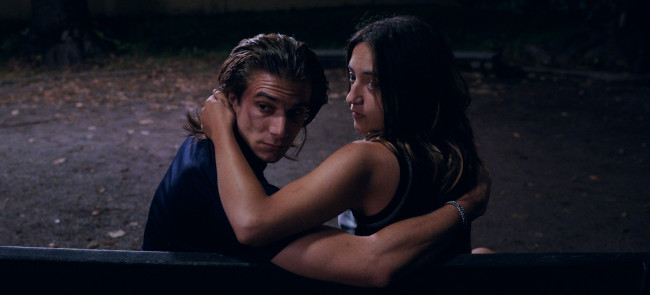 Beautifully photographed to capture a visceral sense of summertime, this Italian drama is set in a rural community infused with deep-seated racism and machismo. So the romance at the centre feels like it has little choice but to be doomed. This is a bracingly honest, observational look at a guy in his early 20s who is only just beginning to see the nature of the world around him. With the charismatic young Guido (Usberti) driving, a group of young men with big guns stalk animals for sport in the northern Italian countryside. By night, they hit the local clubs, where Guido hooks up with the teen Sonia (Bajrami), an immigrant from Kosovo. And even though he flirts with every girl he meets, he becomes smitten by Sonia as they spend days together in idyllic spots in the surrounding countryside. But Guido is being pressured into taking a criminal job in Milan, and the question is whether he can stand up for himself. Narrating the film, the otherwise nonverbal Marika (Poli) introduces herself as possibly autistic. Her older brother grew up with Guido, and she carefully watches their wild antics. Otherwise, the film sticks fairly closely to Guido's perspective, as he interacts with a wide variety of people, winning over almost everyone with his gregarious charm. But he lives for his Rambo-like shirtless hunting expeditions. With his loose, muscly physicality, Usberti plays Guido as the coolest guy in town, and he knows it. It's a remarkably committed performance, a proper breakout for an actor to watch. Opposite him, Bajrami's no-nonsense Sonia simply rejects his bluster, but she's also unable to resist the challenge of taming this beast. Their chemistry is vividly played, as are the messy connections between Guido and his friends and family. In Sonia, Guido sees someone who is going to make something of her life, which of course makes him look at himself through new eyes. In this culture, frustrated young men prefer to throw a punch rather than listening to each other. And shooting a rifle makes them feel invincible. So where this is going is a bit worrying, as Guido battles his head, heart and the culture dictating his entire life. Thankfully, there are lovely touches along the way.
| ||||||||||||||||||||
|
Falling House Review by Rich Cline |
Is it streaming?
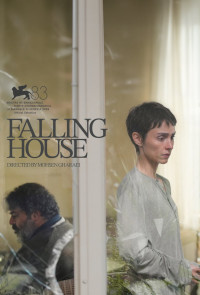
| 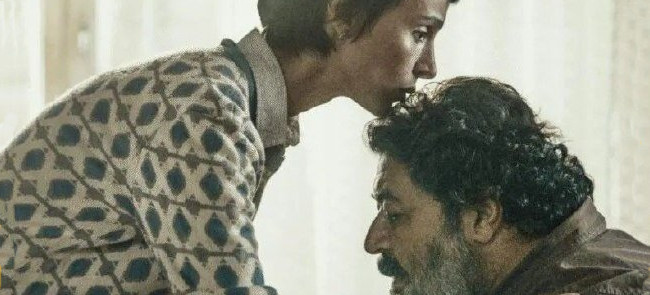 There's a lot of power in this ambitious Iranian film, which shifts from a lively family comedy into a rather dark drama, then continues to dip into psychological horror territory. The extended running time makes the nastiness feel somewhat overwhelming, as we watch a family that is being ripped apart from within. But filmmaker Mohsen Gharaie keeps the audience engaged with strong characters and some bleak resonance. Living in the last house not yet demolished in their neighbourhood, prison guard Rashid (Aslani) is accused of impropriety at work. His wife Zinat (Raminfar), 24-year-old daughter Ensi (Marzban) and younger teen Janan (Khakbazan) find cash for his bail. But he flips out when he learns that Ensi is planning to travel to Turkey to pursue a modelling career. Locking her in her room, and also imprisoning Zinat and Janan, he becomes their jailer, refusing to talk until everyone bends to his will. But of course, he is in the process of losing them completely. As the film opens, we see Rashid's compassionate side, watching him provide generous assistance to prisoners, although this is what has angered his boss. And this is clearly how his daughters see him too: as a chubby, furry teddy bear. They are terrified when this new version of their dad turns up. But Zinat has seen this before. Over the course of the narrative, multiple layers of tension ramp up. Then a winter storm arrives, just as the house's utilities are shut off. And the bulldozers turn up on the designated day. Performances by Marzban, Raminfar and Khakbazan have a raw honesty that sharply reveals the confusion these women are facing when their husband and father completely loses the plot, turning on them in such a seemingly uncharacteristic way. They are especially shocked that he is threatening their safety. Aslani navigates this shift beautifully, allowing us to see the lost man inside Rashid even as he goes to some frightening extremes. It's difficult not to see this film as a scathing critique of a male-dominated culture that loses all ability to consider the facts when women refuse to simply do as they're told without question. Thankfully, the story remains very personal, honing in on this vulnerable family rather than trying to push any bigger messages. But the general sense of injustice in the culture is vivid and provocative.
|
| Salón de Belleza Review by Rich Cline |
|  dir Nathalia Acevedo scr Nathalia Acevedo, Diego Sepulveda Martin prd Paulina Valencia, Christian Evora, Marco Tulio Pires, Matthew Porterfield, Nathalia Acevedo with Sam Louwyck, Erwan Kepoa Fale, Rodrigo Amarante, Christian Evora, Annika Henderson, Simone Bucio, Michelle Astrid, Mattia Barometro, Diego Ivan Cervantes, Chen Yan Ines, Hugo Corona Barragan, Angel Perez release WP Sep.26 vff 26/Mexico 1h48 Is it streaming?
| 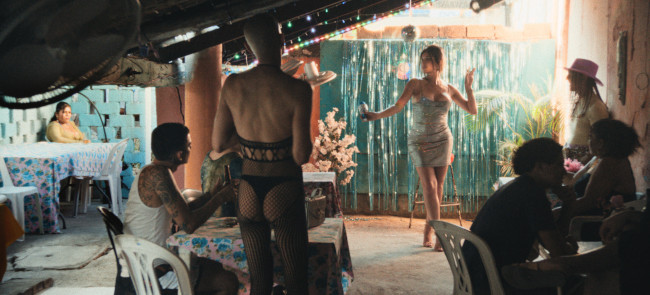 From Mexico, this experimental drama is shot in a richly immersive style that creates a hypnotically enigmatic ambience. Filmmaker Nathalia Acevedo is gifted at capturing knowing details that reveal characters and settings in an unusually visceral way, telling an evocative story without the need for dialog. In addition, the lead character is simply called "the individual", making him an everyman in a surreal but profoundly human odyssey. In what used to be a beauty parlour, a solitary former hairdresser (Louwyck) tends to his fish. And families bring him dying men and women to care for. He ruminates on how death features in all parts of his life, struggling to separate memory from reality. He recalls languorous afternoons with his lover (Evora), makes trips to the fish market and runs his makeshift hospice with kindness and a firm sense of order. He visits a nightclub and gay bathhouse for sex, having given up on real companionship. Then the injured Juan (Fale) turns up. Opening with a lush sequence of underwater photography, the film seamlessly shifts to an aquarium in the salon as this man collects a dead fish from the surface. He is astonished by the atrocities both in his fish tanks and outside in the streets. The film beautifully documents life in his community, with happy kids setting off fireworks and an active volcano in the background. At one point, the camera follows a dying woman's gaze through a hole in the wall and into the sea beyond, discovering submerged statues. Performances have an understated earthiness, guided by Amarante's gravelly narration. This provides an unusually matter-of-fact tone, as death is intimately tied to life. Everyone on-screen is allowed to simply exist in their bodies, without question. This helps add to the film's timeless sensibility, echoing the Aids epidemic as vandals attack outside and the dead are moved to mass graves. This is a remarkably haunting film, full of imagery, sounds and music that are beautiful and surprising. It's beautiful and indulgently downbeat, both elegiac and mournful, with only a vague narrative line. So it can be a challenge to stay connected over nearly 100 minutes. But continual touches skilfully add emotional depth. And the connection between this man and Juan is delicately played, offering a whisper of joy at what feels like the end of the world.
| 
See also: SHADOWS FILM FESTIVAL © 2026 by Rich Cline, Shadows
on the Wall
HOME | REVIEWS | NEWS | FESTIVAL | AWARDS
| Q&A | ABOUT | TALKBACK | | ||||||||||||||