| SHADOWS ON THE WALL | REVIEWS | NEWS | FESTIVAL | AWARDS | Q&A | ABOUT | TALKBACK | |||||||||||||||||||||
 Shadows off the beaten path Shadows off the beaten pathIndies, foreign, docs and shorts...
On this page:
NOBODY |
THIRST |
THE VIOLINIST
| |||||||||||||||||||||
| See also: SHADOWS FILM FESTIVAL | Last update 26.Jun.26 | |||||||||||||||||||||
|
Nobody Review by Rich Cline |  MUST
MUST  SEE SEE
| |||||||||||||||||||||
 dir Yu Shui prd Wang Jun scr Liu Jia, Shui Yu voices Chen Ziping, Lu Yang, Dong Wenliang, Liu Cong, Lin Qiang, Chen Zhe, Li Meng, Fu Tom, Yu Shui, Zhang Wentian, Wu Xu, Wang Shangbin, Han Dongqing, Jiang Xiangliang release Chn 26.Jul.25, US 7.Nov.25 25/China 1h58  Is it streaming? |
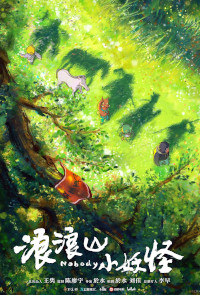
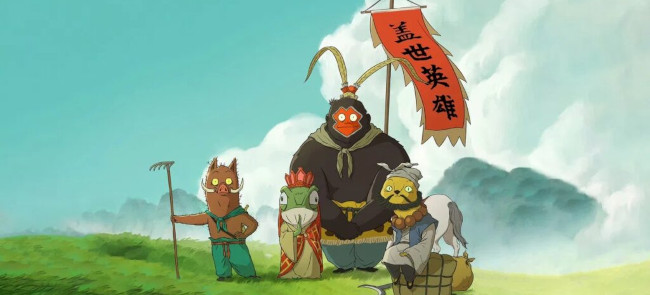 With a distinctive and engaging hand-drawn animation style and an enjoyably rambunctious sense of humour, this Chinese adventure is inventively constructed to pull us in deeply. Director-cowriter Yu Shui brings a ragtag group of critters to life in unusually nuanced ways, using offhanded comedy that cleverly highlights some deeper ideas within both the characters and the narrative. And it looks gorgeous, as scenes ripple with both personality and artistry. In the forest, a supernaturally charged yao boar (Chen) learns that a passing monk might be the key to gaining immortality. So he teams up with his yao toad friend (Lu) to impersonate travellers seeking enlightenment. They enlist a weasel (Dong) and gorilla (Liu) to complete the quartet, and they set off across the country, trying to keep ahead of the actual truth-seekers. Along the way, they discover things about themselves, and in helping locals they become folk heroes. Especially as they take on cruel yao masters, like the super-powered king who is kidnapping children. Visually, the animators have used a cartoonish design that is then layered with constantly surprising textures, from glorious landscapes to a range of often astonishingly expressive characters, both animals and humans. The attention to detail is unusual, because the film maintains its somewhat simplistic look even as the imagery finds wonderful complexities. And the storytelling is similarly layered, finding meaningful touches even in the silliest scenes. These sentient woodland creatures have heavy echoes of Miyazaki's anime classics, with quirky flourishes, exaggerated features and a continual stream of witty touches. They are also far more complicated than the usual animated comedy characters, as their weaknesses and offbeat yearnings feed into the messy ways they interact, react and make sometimes very dodgy decisions. This creates heart-stopping moments in the middle of even the craziest action set-piece Indeed, the filmmakers are continually digging beneath the colourful surfaces, exploring the motivations of these opportunistic, marginalised figures who suddenly find themselves confronting the nature of heroism that might exist within them. It's a huge topic, and the script handles it with unusual insight, grounding each scene in earthy humour that contains something unexpectedly resonant. And the ending is especially light-handed, making a heart-stopping point about immortality in a beautifully subtle way.
| ||||||||||||||||||||
|
Thirst þorsti Review by Rich Cline | 
Is it streaming?
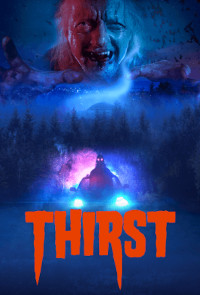
| 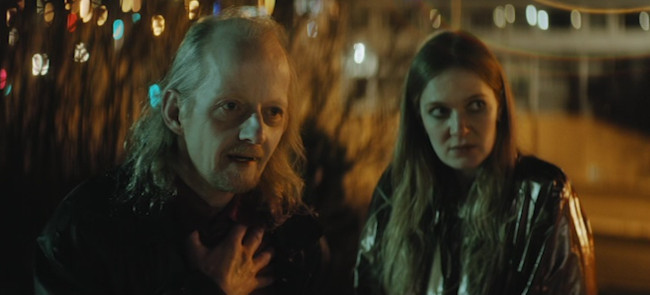 Finally getting a delayed UK release, this deadpan queer Icelandic vampire thriller gleefully throws buckets of gore all over this month's Pride celebrations. Directors Steinthor Hroar Steinthorsson and Gaukur Ulfarsson maintain an almost absurdly over-serious tone that just about makes up for the low-budget production values. As does the far over-the-top gore. So while it's perhaps too plodding to become a cult favourite, the climax is delightfully gruesome. In Reykjavik, detective Jens (Jensson) interviews troubled former junkie Hulda (Kristinsdottir) after the suspicious overdose death of her brother (Steinthorsson). Even her mother (Halldorsdottir) doubts her innocence. Later in the street, Hulda intervenes for Hjorter (Steinason), who is being attacked by young thugs, and the scene turns into a bloodbath. Now Hjorter is wafting around helping prove her innocence in extremely grisly ways, reassuring her that he never attacks women. Indeed, Hjorter has an insatiable appetite for blood flowing into, ahem, male appendages. But a religious cult has plans to take on this demonic threat. Performances are dry and understated, which provides an offbeat mix of repressed emotions and pitch black humour. Hulda's feverishly grotesque nightmares echo the inconceivable things she is witnessing, made worse by her mother's cruel rejection. And she just wants all of this excessive bloodletting to stop. Meanwhile, Jens' rabid preacher wife (Sveinbjarnardottir) shouts on television about evil descending on the city. Then their tenacious acolyte daughter (Sigursteinsdottir) arrives with hideous intentions of her own. There's also a creepy story told by a taxi driver (Gnarr) that is skilfully animated in an eye-catchingly macabre style. The script is ambitious in the way it populates the film with various characters and plot threads, but it isn't always clear how these people interconnect. The camerawork and editing feel somewhat clumsy, but there are several great-looking sequences, and the horrific makeup is superb. Terrific moments scattered throughout the movie include the quiet scene in which Hjortur and Hulda bond over their feelings of loneliness. This kind of subtext helps pull us in, while the straight-faced nastiness keeps a smile on our faces. Running jokes about hot dogs are flatly ridiculous. But as Hulda says while holding a victim's splayed intestines, "Everything is going to be fine."
|
| The Violinist La Violinista Review by Rich Cline | 
Is it streaming?
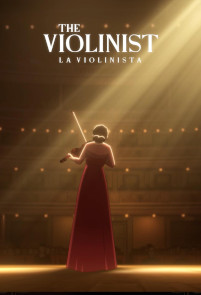
| 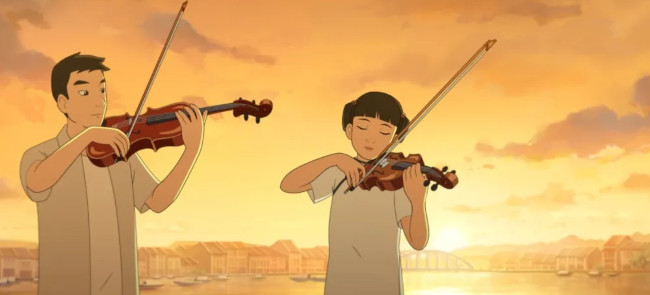 While the narrative sweep of this Spanish-coproduced Singaporean epic is impressive, there are niggling problems as we continually wonder why we are watching the story rendered with simple anime-style drawings rather than live-action. Aside from a few whizzy digital moments, the imagery is fairly unremarkable. And there are further issues with the script, due to sentimental dialog and gaps in the plot. But the central saga is gripping. In 1932 Singapore, young Fei (voiced by Tan and Rong) is preparing for her first violin recital when street urchin Kai (Sng) is taken into her household. He soon shows prodigious musical skills, becoming her partner as they perform for audiences both in high society and on the streets. As teens they finally admit their love for each other, but Kai heads off to fight in the resistance against the vicious Japanese invaders. Meanwhile, Fei finds ways to survive and keep their dream alive, even after it is reported that Kai was killed in action. Framing scenes feature a Spanish journalist (Arce) visiting the world-famous elderly Fei, who recounts the story behind a photograph that he inexplicably has in his possession. As Fei narrates her life, the film includes scenes and entire plot threads that she knew nothing about, adding texture to the story but leaving it without a meaningful point of view. That said, the compelling story holds the interest through historic events and personal challenges. Using mostly English may help wider audiences connect, but it sometimes feels a bit odd alongside local dialects and Japanese. Characters lack enough visual detail to express emotion, which is instead conveyed through heightened dialog. Of course, the events these people experience are profoundly moving as well, from horrific violence to some more nuanced textures, most notably in a Japanese soldier who befriends Fei and the two young children she rescues during wartime. Larger themes swirl through this story, adding meaning to events over the course of five decades. There's a lovely exploration of the power of music to hold feelings, often expressing much more than words ever could. So the ways Fei holds on to Kai's memory is beautiful, even if it feels like we are missing a chunk of this narrative. It's frustrating that the script simply neglects to fill in so many gaps, leaving us wondering why these people seemingly chose misery over happiness. Maybe that's a cultural thing, but there are ways to express that cinematically that are never explored here.
| 
See also: SHADOWS FILM FESTIVAL © 2026 by Rich Cline, Shadows
on the Wall
HOME | REVIEWS | NEWS | FESTIVAL | AWARDS
| Q&A | ABOUT | TALKBACK | | |||||||||||||||